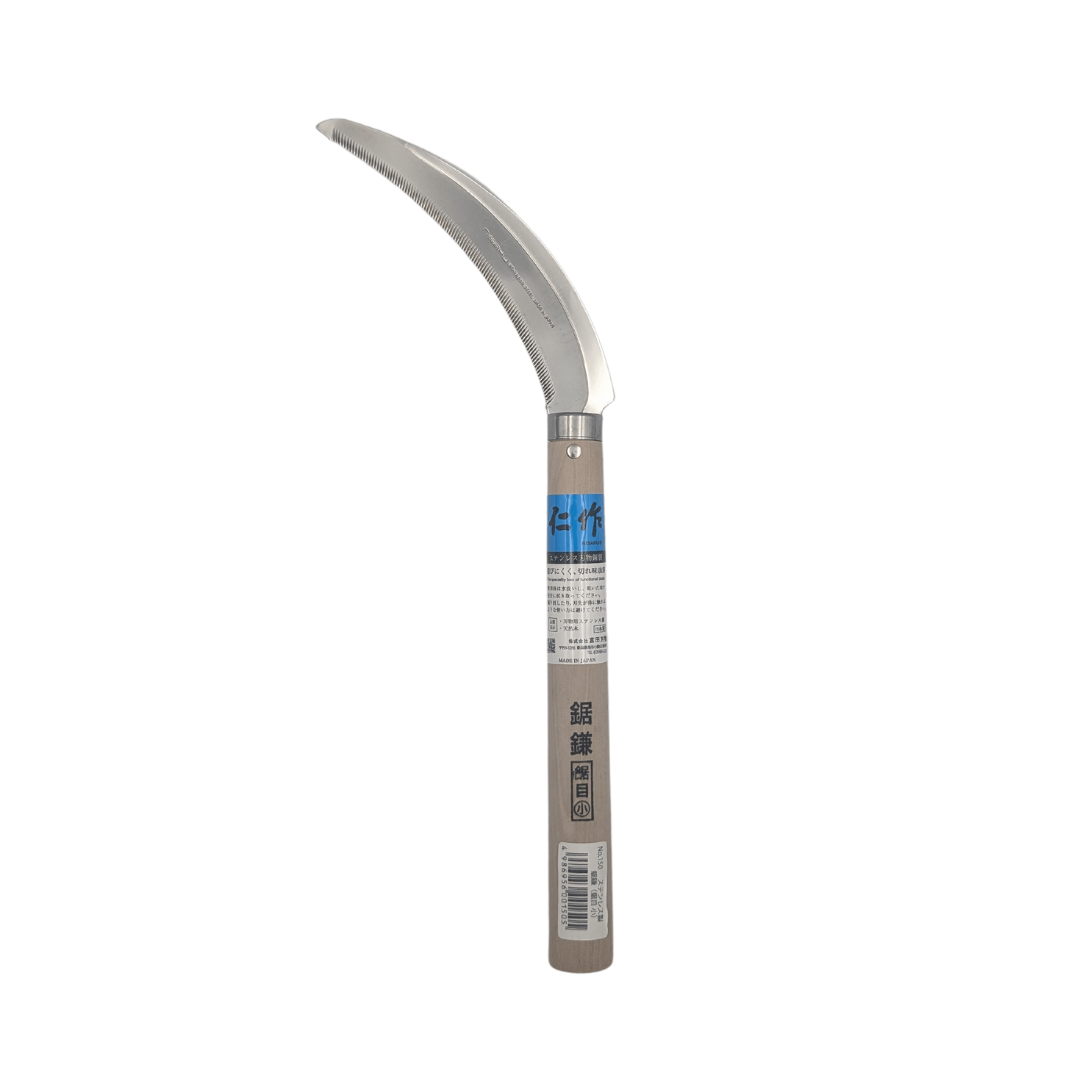
What is the Nisaku Nokome Tooth Sickle used for?
This Japanese sickle is ideal for slicing grass, weeds, soft stems, and light harvesting. It’s great for garden bed cleanups, no-dig setups, living soil, and detailed edging where power tools are overkill.
What types of weeds and plants can it cut?
It handles fibrous weeds, grasses, vines, and soft roots well. For thick woody stems, deep taproots, or hard roots, use secateurs or a digging tool instead. Always cut above irrigation lines to avoid accidental damage.
What’s special about the Nokome Tooth blade design?
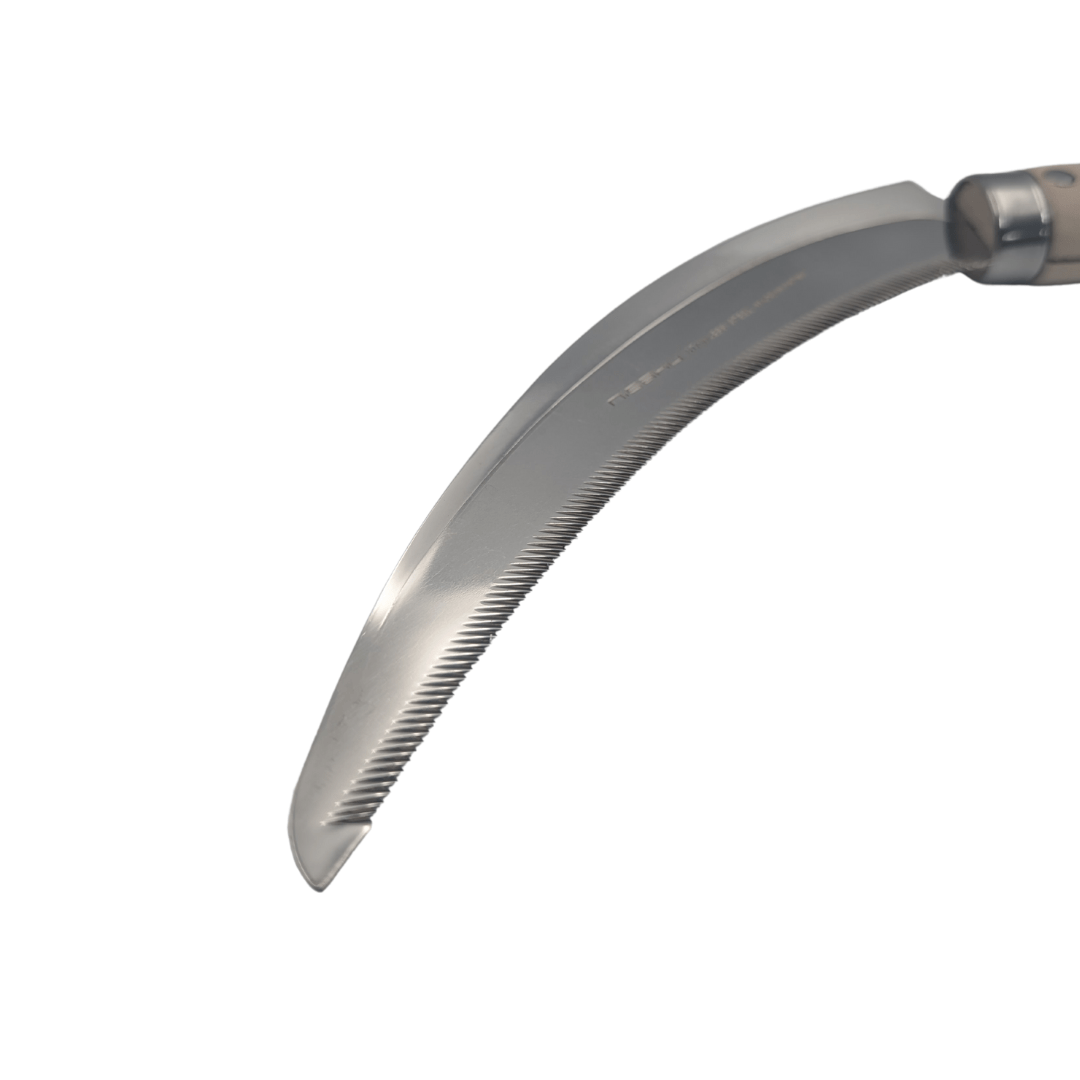
The inner serrated edge grips and slices fibrous growth, while the smooth outer edge is perfect for soft stems and clean cuts. The curved blade allows sweeping motions that outperform straight knives for certain tasks.
What’s the best way to cut with it?
Use short pull strokes to let the blade do the work. Grip the handle firmly, aim your cut, and slice—don’t hack. Bunch grass or weeds before cutting to get cleaner results with less snagging.
What are the size and weight details?
The total length is about 35cm, with a 15cm blade and a 22cm wooden handle. It weighs around 170g—light enough for longer weeding or harvesting sessions without fatigue.
Is it safe for beginners to use?
Yes, as long as you treat it like a sharp tool. Gloves are optional but helpful. Don’t hold what you’re cutting, and keep your off-hand out of the blade path. Not recommended for children.
Can I use it for harvesting herbs or vegetables?
Yes—use the smooth edge for leafy greens or herbs. It gives clean cuts without bruising. Just clean the blade before and after use, especially for food-related tasks.
Is the blade stainless steel, and will it rust?
It’s made of stainless steel, which resists rust—but it’s not rust-proof. Wipe it clean after use, especially if cutting wet plants or using near fertilizers. A light oil coating helps with long-term care.
How should I store the Nisaku Sickle?
Store it dry and clean, ideally in a drawer, rack, or sheath to protect the edge. The wooden handle tolerates moisture, but don’t leave it damp. Wipe it occasionally with mineral oil for longevity.
How do I sharpen the smooth and serrated edges?
Use a sharpening stone for the smooth edge, following the bevel. For the serrated side, a tapered ceramic rod works best. Many users keep the serrations clean and focus on sharpening the main blade regularly.
What should I avoid doing with it?
Don’t pry, dig like a trowel, or force it through thick branches or rocky soil. Avoid scraping through grit or sand, which dulls the blade fast. This tool is for slicing—not chopping or digging.
How is it different from secateurs or a whipper snipper?
Secateurs cut stems; the sickle slices through dense surface growth quickly. It’s quieter and gentler than a whipper snipper for detail work, but not a replacement for large-area mowing.
Is the Nisaku Sickle good for left-handed users?
Yes—the handle and blade design are ambidextrous, making it comfortable for left- or right-handed use with no issues.
Can it cut wet grass or slice through mulch?
Yes, though wet grass may clump more and dull the blade faster. Lightly slicing through mulch is fine—just avoid grinding the blade into soil or gravel.
Can I get notified when the Nisaku Sickle is back in stock?
If the page offers a “Notify Me” option, just enter your email to get an alert when it’s restocked—no need to check back manually.